Recognising the risk and putting the right shade, water, management and nutrition strategies in place before summer hits.
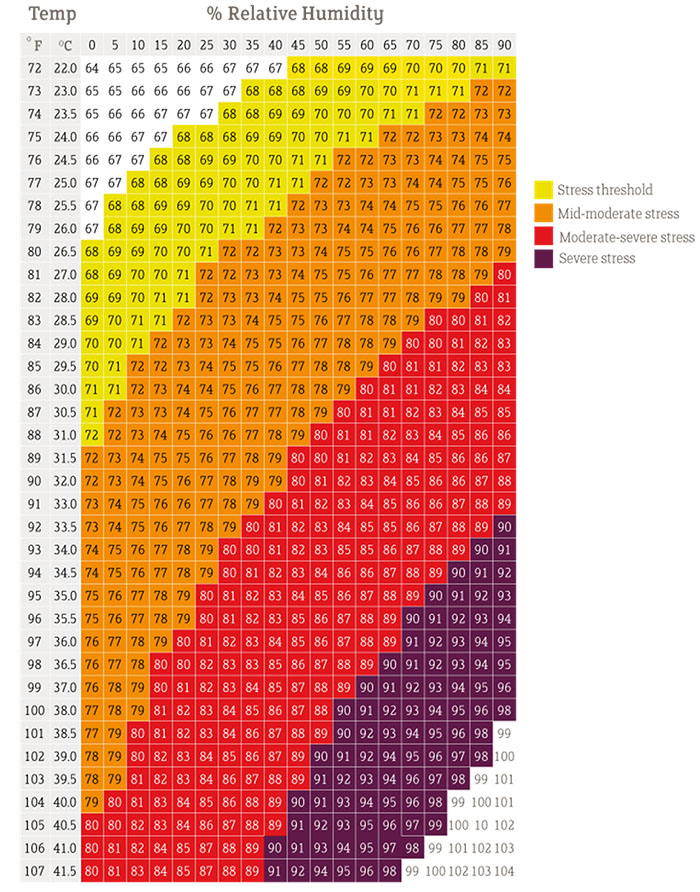
Heat stress is one of the biggest production challenges Australian dairy farmers face over summer. The level of stress a cow experiences is determined by the Temperature-Humidity Index (THI), as shown below, and stress can start at temperatures as low as 23°C.
Heat stress occurs when temperature and humidity increase to a point where cows are no longer able to cool themselves effectively. Once that happens, intake drops, rumen function is affected, and production follows. Getting ahead of it with the right combination of cooling, management and nutrition is far more effective than reacting once cows are visibly struggling.
On-Farm Tools
- Shade: Move cattle to a shaded area during the hottest part of the day. Around 12m² per cow is recommended to reduce crowding, as crowding will exacerbate heat stress.
- Ventilation: If cattle are under cover, ensure there is correct airflow through the space.
- Sprinklers or misters: These must be paired with good ventilation to be effective.
- All three of the above are especially important around the dairy, as cattle spend a large amount of time in the holding yard each day.
- Drinking water: Ensure adequate drinking space and water supply. A high-producing cow can drink over 130L of water a day, and cows will drink around 50% of their daily requirement immediately post-milking. A trough close to the dairy that can deliver a large volume of water continuously throughout milking is essential.
Management Tools
- Alter milking times during warmer months to reduce the time cattle spend walking in the heat of the day.
- Alter grazing practices to ensure cattle have access to shade during the hottest parts of the day. This may mean on/off grazing, where cattle graze in cooler periods and spend hotter periods in shade with easy access to fodder.
- Alter feeding times so peak digestion isn’t occurring during the hottest part of the day.
Nutritional Tools
- Increase the nutrient density of the ration: heat stress reduces intake, so feeding a higher protein, more energy-dense ration helps maintain production. Energy density can be lifted through both protected and unprotected fats, and by feeding better quality forage and fodder.
- Increase dietary buffering: heat stress increases respiration and panting and reduces rumination time, which lowers saliva and blood bicarbonate.
- Modify the mineral content of the ration: increase sodium, potassium and magnesium levels.
- Add betaine to the ration: betaine is a methyl donor that helps reduce energy expenditure and maintain osmotic balance.
Conclusion
Heat stress management isn’t a single fix. It’s the combination of shade, ventilation, water access, altered management timing and a well-balanced ration that keeps cows comfortable and production on track through summer.
Every farm’s layout, infrastructure and herd will call for a slightly different mix of these tools. To talk through what suits your system, speak with your nutritionist or contact your local Reid Stockfeeds representative.
Key Takeaways
- Heat stress can start at temperatures as low as 23°C. Check the THI chart, not just the thermometer.
- Shade, ventilation and water access matter most where cows spend the most time, particularly the dairy holding yard.
- A more nutrient-dense, better-buffered ration helps offset the intake losses heat stress causes.
- Get the plan in place before summer, not once cows are already struggling.
