It has been heartening to see the many truckloads of hay finally arriving to drought-affected areas in the south recently – although, sadly for many animals, this may be too little too late.
Many farmers have already depopulated their herds in order to eke out the remaining forage available – but there is no denying the situation has caused major changes in the sector. As this is now the second year where there have been problems with pasture and forage availability and cost, and there is no guarantee this will not happen again, how can farmers best approach the next season to create security around their business?
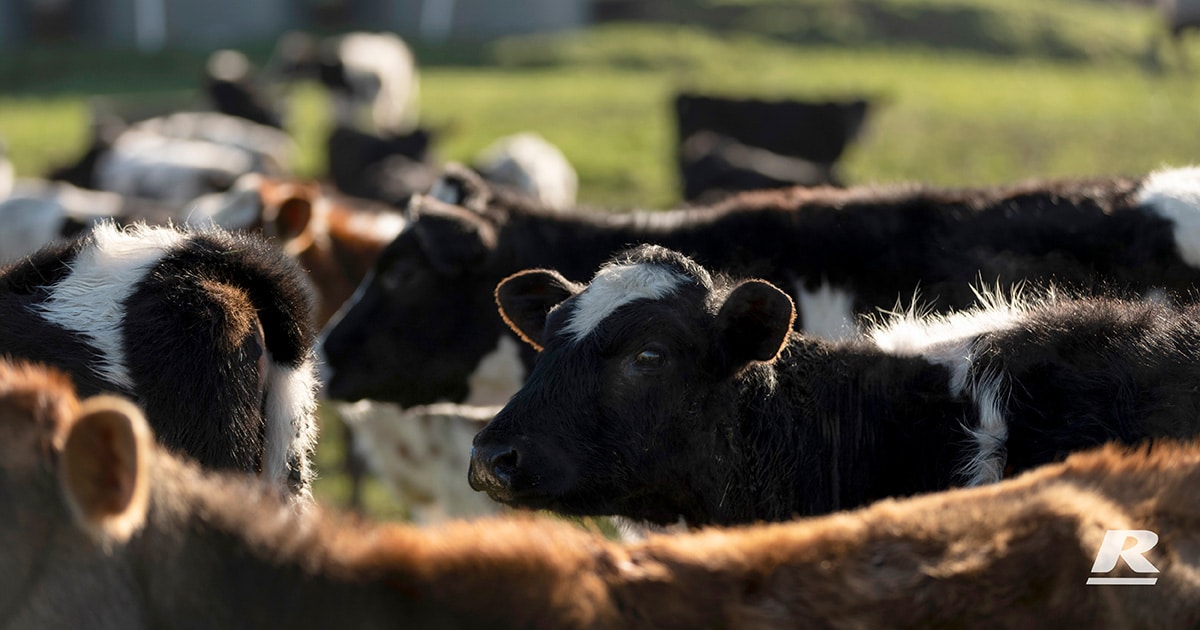
Ruminants rely on a continuous source of fibre from forage for their basic nutrition. Winter feed budgeting is used to ensure there is enough (as silage, hay or straw) to get through the months where weather conditions are poor. When temperatures dip below 10⁰C, grass will not grow, especially the more sensitive rye/clover leys. As it is impossible to reliably predict the weather a long time in advance, farmers must plan ahead, to ensure adequate reserves for all eventualities.
For winter feeding plans, it is prudent to minimise any contribution of pasture, to err on the side of caution. This worse-case scenario approach is for two reasons: 1. Pasture may not grow at all under adverse climate conditions (drought, cold, flooding) and 2. Whatever does grow is likely to be comparatively low in nutritional quality. In countries where winters are always cold and wet, there is no choice but to make enough forage to last at least eight months, as the animals are kept indoors to preserve the paddocks for spring growth. However, as adverse climatic events appear to be more frequent across the world, provision of preserved forage becomes of utmost importance for all farmers.
Forage (as defined by the National Research Council) describes the fibrous, feedstuffs consumed by grazing animals, with preserved forms made during seasons when pasture and cereals are growing rapidly. So why is it important to make sure grazing animals have free access to forage at all times? Why can’t we just replace it with finely ground or soluble fibre? Well, for cattle and sheep, it is essential to provide this kind of feedstuff as it provides ‘structure’ and volume (known as ‘effective fibre’) in the rumen. This promotes correct bacterial fermentation, preventing acidosis, stimulates saliva production (as a natural antiacid) and promoting chewing and cudding to maximise digestion efficiency. Without forage, the volume of the rumen will reduce, limiting dry matter intake and, with it, the ability to produce enough energy and nutrients to support the animals’ needs.
Many farmers have reduced their herd size recently. This offers the opportunity to shut up more acreage of the farm for growing pasture or cereal silage cops. Silage is easier to make, as it does not require so many days of good weather to dry and can be stored outside, in pits or as wrapped bales, whereas hay need protection from the elements to maintain quality.
Traditionally, pasture-based hay was the main form of preserved forage used on farms. In modern times, silage made from various crops are used to feed to grazing animals. Making good quality silage requires attention to detail. Maturity at cutting, wilting time, dry matter, harvest conditions, crimping, effective compaction (to remove oxygen quickly), the use of inoculants and gas exchange wrap all affect final silage quality. Choice of pasture or cereal variety can affect rumen efficiency, for example, some maize cultivars are known to have higher digestible NDF. Other cereals can be ensiled, but care must be taken that moisture content is high enough to allow correct fermentation. Too dry, and the final product will have less nutritional value and poor preservation, due to air not being excluded. Maize silage should be cut when it is 25-35% dry matter, and the kernel has not yet become ‘floury’ but is still milky on the inside. Other cereals (wheat, barley, triticale, oats) should be cut just as the plants start to turn yellow and the grain is still soft. Immediate compaction to exclude all air is essential to prevent spoilage organisms taking advantage. When air-loving pathogenic bacteria infect silage, they produce harmful (potentially fatal) toxins. Table 1 below shows typical energy and nutrient levels in well-made cereal silage.
| DM | ME | CP | NDF | Starch | Oil | Ca | P | Mg | |
|---|---|---|---|---|---|---|---|---|---|
| Maize silage | 25–35 | 10.8–11.7 | 8–9 | 45 | 25–35 | 2.9 | 0.4 | 0.20 | 0.25 |
| Cereal whole crop | 30–45 | 10–11 | 10 | 50 | 18–22 | 3 | 0.2 | 0.25 | 0.1 |
Table 1. Typical energy and nutrient specification of well-made cereal silage.
When nutritionists talk about ‘feed budgeting’ they are referring to the amount of forage needed per day per animal (on a dry matter intake basis). Ideally, 50% of daily intake should be in this form to ensure adequate fibre at all times. This would equate to 8 kg per head per day DM basis where 16 kg DMI is needed to meet energy and nutrient requirements. This means that farmers must plan ahead to ensure they have enough forage (preferably on-farm supplies to be cost efficient) to cover 8 months minimum for the following winter. If herd size has been decreased, this is an opportunity to lay aside acreage to grow more pasture for grass silage and hay or an alternative, such as maize, for whole crop silage. Maize silage has other benefits, as it will utilise excess nitrates in the soil (for up to three harvests) without requiring further fertiliser. It is low in protein, so can be used alongside higher protein feedstuffs (especially lush pasture silage) to reduce the risk of high urine N, which is a major contaminant of ground water. Modern maize varieties have useful levels of digestible NDF for rumen function and can grow in much harsher conditions and lower light levels than traditional cultivars.
For accurate budgeting, check expected yields per acre for pasture or cereals, erring on the side of caution in case of poor harvesting conditions. Check you have adequate storage, if making hay or pit silage, and plan for costs of bale wrap in case its needed. Where possible, always use an inoculant to get the best fermentation and prevent spoilage and financial losses – you have to pay per bale or per ton, whether or not it is edible after ensiling!
Make sure all farm staff understand how much per head per day is needed – this is often underestimated, especially for younger animals, and make sure it is provided so all the animals have free access.
Talk to your local Reid’s Dairy Specialist today about the benefits of our mash and the products we can offer to suit your requirements on 1300 REID FEED or enquire here >
Author
Dr Lucy Waldron
Head of Nutrition and Technical Services
