As World Egg Day is mid-October, it is timely to look at their importance in human food and why feeding hens correctly gives better, stronger more nutritious eggs.
Poultry provide the basis for protein intake globally, as they are not subject to any religious or other taboo and are affordable by all. In developing countries, egg production is used as the basis for establishing small scale businesses run by women to fund education for their children. In the western world, eggs are taken for granted by the population. Farming has developed in the last 30 years to provide consumers with a variety of choice regarding production systems, types of feed used for layers and eggs which have added human health benefits.
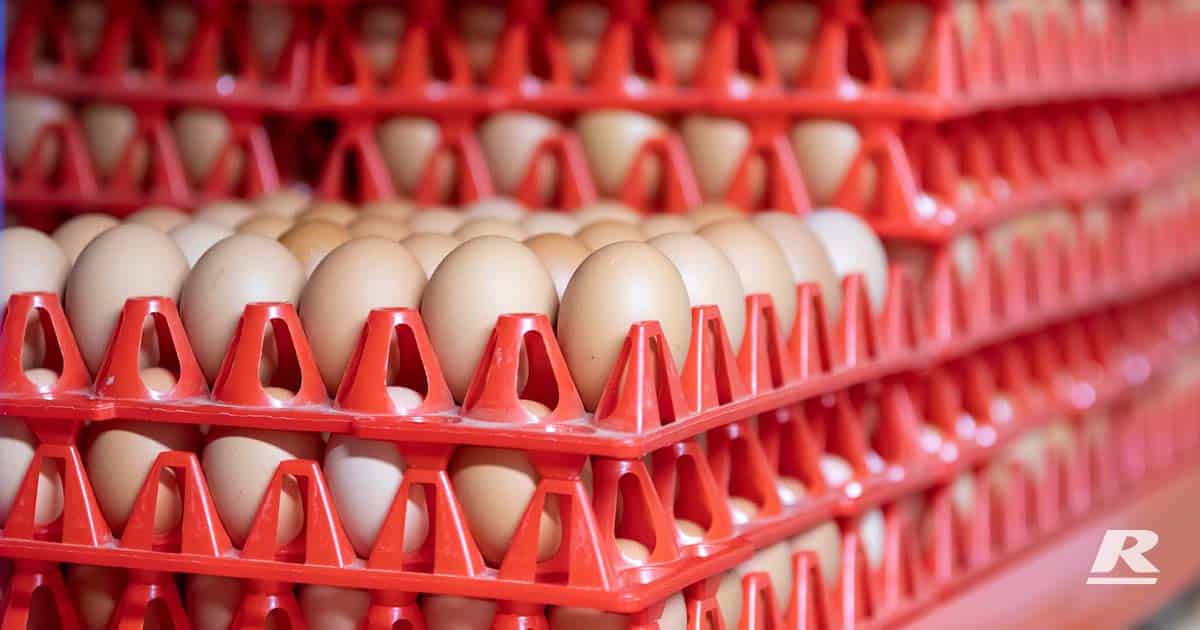
The balance of nutrients provided in layer diets is paramount in maintaining high percentage lay and good quality eggs. Poultry nutrition is a detailed and highly researched science. In the 1990s formulating poultry diets based on digestible amino acids came into being, which helped in the production of healthy birds and used to improve egg size, uniformity and quality. Minerals are a major consideration in any animal’s diet, but in layers, their provision for stable, strong shell laydown dictates profitability on farm and robustness for transport, packaging and shelf life. Consumers are often unaware that the shell is actually porous. This means that dirty eggs should not be washed – as this can transfer bacteria into the interior. Freshness can be easily tested in any kitchen, as it is related to the amount of gas produced internally from the egg. If you put an egg in a jug of water and it sinks – it is fresh. If it floats, it shows that gas has built up inside from degradation and it is not safe to eat. Antioxidants are important in keeping eggs fresher for longer. Another test of quality is the characteristic of the egg while (albumen). This should have distinct structure with a rounded, cohesive form that gives the best poached eggs. If its ‘wet’ or splattery and very flat, the hen has not received enough vitamins and minerals.
So, why are eggs important in human nutrition? Providing certain nutrients to layers promotes deposition in the egg, which can provide a host of benefits. As eggs have been described as the most perfect form of digestible protein, and as an affordable food, this is important for children and adults alike. Egg nutrients are readily absorbed from the gut and held in tissue and organs to help build reserves, when requirements may be higher, or in people with increased need of nutrients. Hence, eggs have been used for invalids and those recovering from disease or surgery to ‘build the patient up’. In a world of ultra-processed, chemically enhanced food, eggs provide a simple, easy meal that is full of goodness.
We can feed hens specific nutrients that are transferred into eggs. The original Colombus eggs were launched containing healthy fatty acids for cardiac function. The fact that yolks contain high levels of good cholesterol is important for cell membrane formation and brain function. The balance of digestible protein, vitamins and minerals from eggs has led to recommendations for pregnant women to consume at least one a day, preferably two.
Micronutrients can be overexpressed in eggs from diet manipulation. Populations affected by the Chernobyl disaster in the 1990s needed help to prevent DNA damage, which were being manifested as childhood disease, malformations and debilitated health. A government project was launched producing eggs containing high levels of antioxidants (especially selenium, which is essential for cell DNA repair) to limit genetic damage from radiation fall out. Adding organic selenium in higher levels to layer diets allowed the daily recommended intake of antioxidant minerals to be expressed in just one egg per school child per day.
So, eggs are a super food for humans and can be made more beneficial by feeding hens extra nutrients that are then overexpressed in eggs for health benefits.
Talk to your local Reid’s nutritional specialists today about the benefits of our poultry feed products curated to ensure your flock thrives on 1300 REID FEED or enquire here >
Author
Dr Lucy Waldron
PhD RNutr AAS RFellow (Massey)
Head of Nutrition and Technical Services
